Why you should look after your tyres — bicycle, motorcycle or ATV
Tyres are your only contact with the road. Correct pressure, wear checks and proper storage make the difference between a safe ride and a risky one.
Tyres are your only contact with the road. Whether you ride in the city, on the highway or on rough trails, a few square centimetres of rubber decide how well you brake, how stable you corner and how safely you arrive. Here’s why a few regular minutes matter.
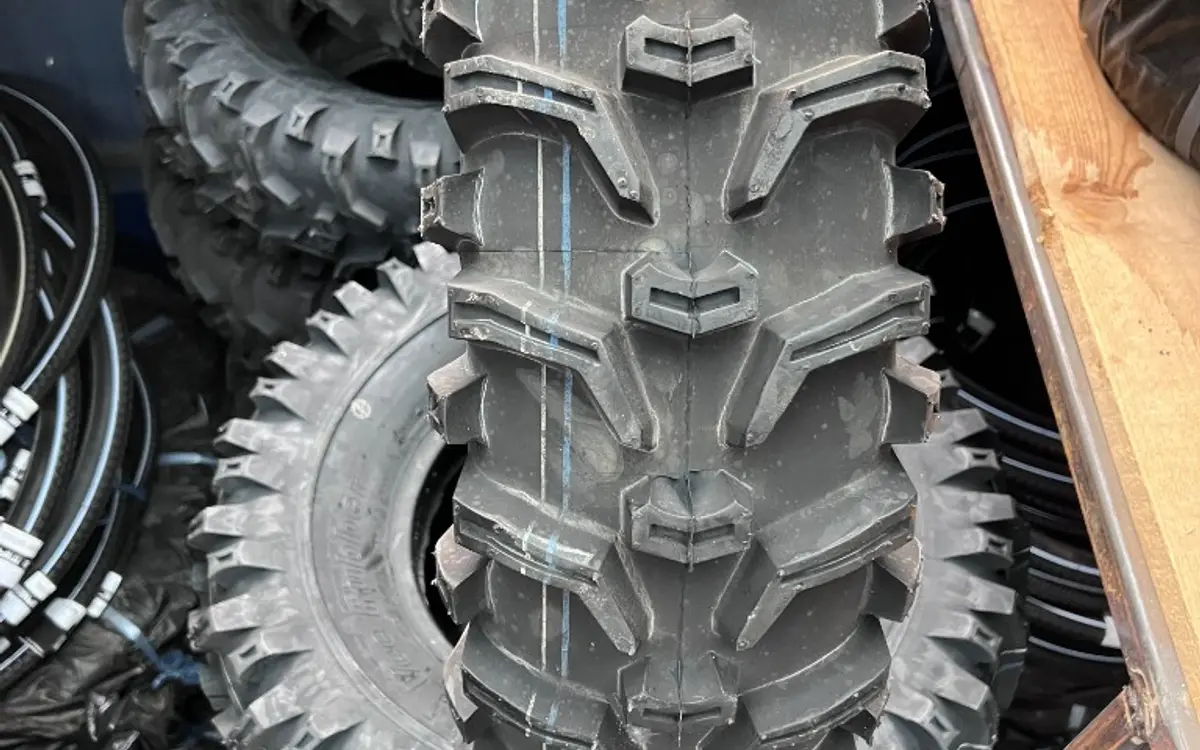
Aggressive tread on a new tyre — every knob plays a role in grip and self-cleaning.
1. Your safety depends directly on tyres
Braking, steering and stability all go through the tyres. A worn or wrongly inflated tyre lengthens stopping distance, “floats” on wet tarmac and loses grip when you need it — in a corner or emergency stop.
- On bicycles — bald tread slides on wet tarmac, leaves or gravel, and puncture risk rises sharply.
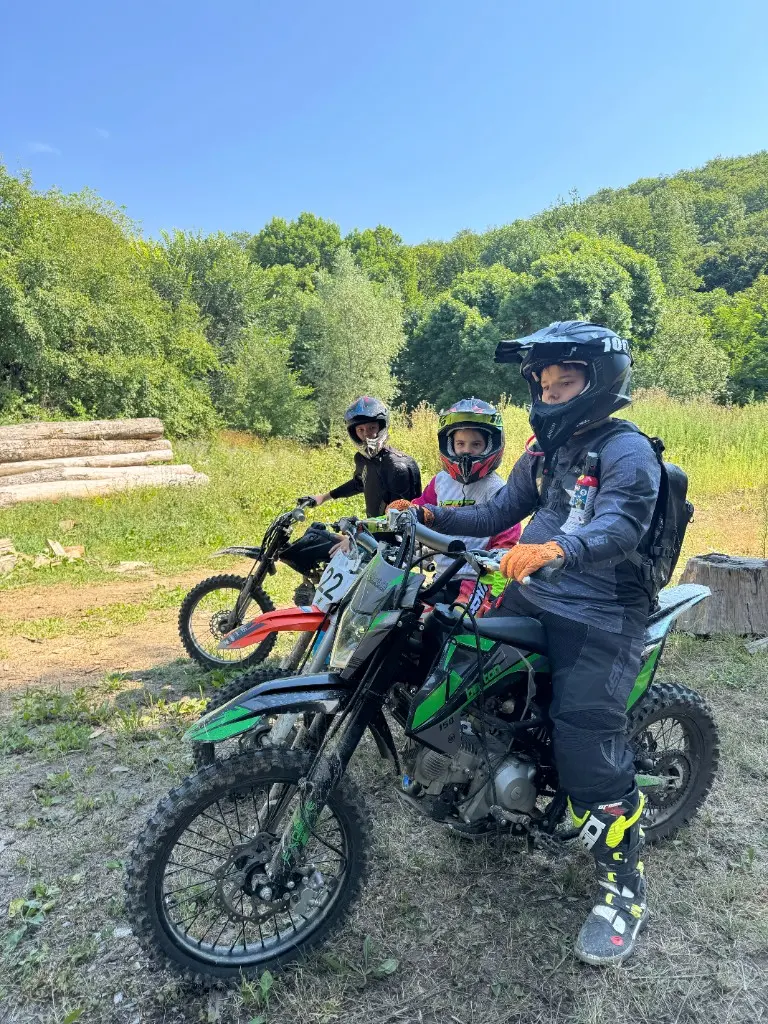
- On motorcycles — you have only two wheels: lose grip on one and there’s no “second chance” like in a car. Tyre condition is critical.
- On ATVs — tough terrain demands maximum knob grip; a degraded tyre can cut or peel off the rim under load.
2. Correct pressure — simplest habit, biggest effect
Wrong pressure is the number one cause of premature wear. Under-inflated tyres overheat, wear on the edges and waste energy (or fuel); over-inflated ones wear in the centre, skip on bumps and lose grip.
- Check pressure at least monthly and before any long ride — tyres naturally lose 1–2 PSI per month.
- Use manufacturer values — on the sidewall and in the vehicle manual.
- Measure when cold, before riding — after a few kilometres values rise and readings are wrong.
3. Wear and rubber ageing
Rubber doesn’t only wear by riding — it ages over time. Compound loses elasticity, micro-cracks appear, and grip drops even if tread still looks OK. Check regularly:
- Tread depth — below the wear limit, the tyre no longer clears water and mud.
- Sidewall cracks — clear sign of ageing; replace regardless of tread.
- Deformations, bulges, cuts — any lump on tread or sidewall means compromised structure.
- Age — on motorcycles and ATVs, tyres over 5–6 years old deserve replacement even if they look fine.
4. Proper storage extends tyre life
If you swap tyres seasonally or store the vehicle over winter, how you store matters more than you think:
- Dry, cool place away from sun — UV dries out compound.
- Away from ozone sources (electric motors, compressors) and fuel or solvents.
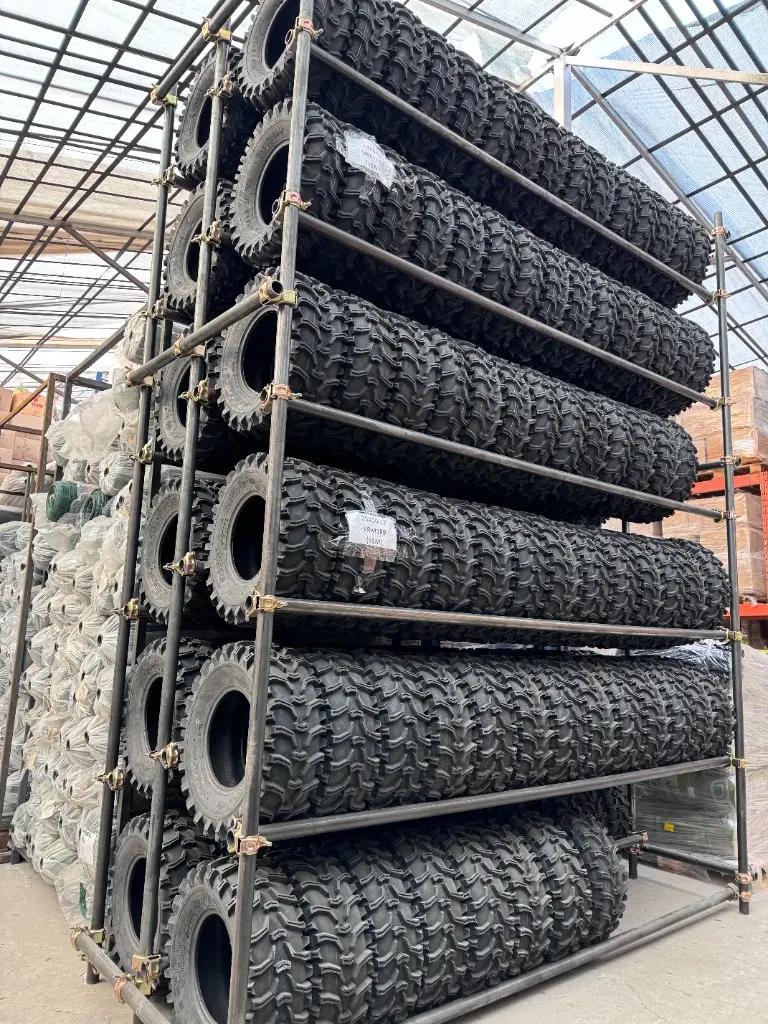
- Unmounted tyres stored upright, rotated periodically; mounted ones can hang or be stacked.
- Vehicles parked for months should be moved so tyres don’t flat-spot.
5. Well-maintained tyres cost you less
Tyre care isn’t only safety — it’s money. Correct pressure cuts rolling resistance (less effort pedalling, lower fuel on moto and ATV), and even wear means normal replacement intervals, not premature. A set checked monthly can last 20–30% longer than a neglected one.
When must tyres be replaced?
Replace without delay if you see:
- tread below wear limit or broken knobs;
- visible cracks on sidewall or between knobs;
- bulges, deformations or visible cords;
- repeated flats with no obvious cause;
- hardened, “glassy” rubber that slides even when dry.
Time for a new set?
If your tyres show wear, choose a new set from real Roataway stock — Vee Rubber and Vee Tire Co for bicycle, motorcycle and ATV, 48h delivery anywhere in Romania.
FAQ
How often should I check tyre pressure?
Ideally every 2–4 weeks and always before long rides. Bicycle tyres with tubes lose pressure faster — weekly checks are the golden rule.
Can I repair a sidewall cut?
No. The sidewall is structural — a cut there means replacement. Only small punctures on the tread can be repaired safely.
Where can I get quality tyres for bicycles, motorcycles or ATVs?
Roataway.ro is an official Vee Rubber and Vee Tire Co dealer in Romania — original tyres and tubes, real stock and fast nationwide delivery.