What pressure should tyres be? Guide for bicycles, motorcycles and ATVs
Wrong pressure ruins even the best tyre. Practical guide with typical values for bicycles, motorcycles and ATVs, plus simple rules for terrain and load.
Pressure is the free adjustment with the biggest effect on grip, comfort and tyre life. Too low — the tyre flexes, overheats and wears on the edges. Too high — it skips on bumps and loses contact. Here are guide values and adjustment rules for bicycles, motorcycles and ATVs.
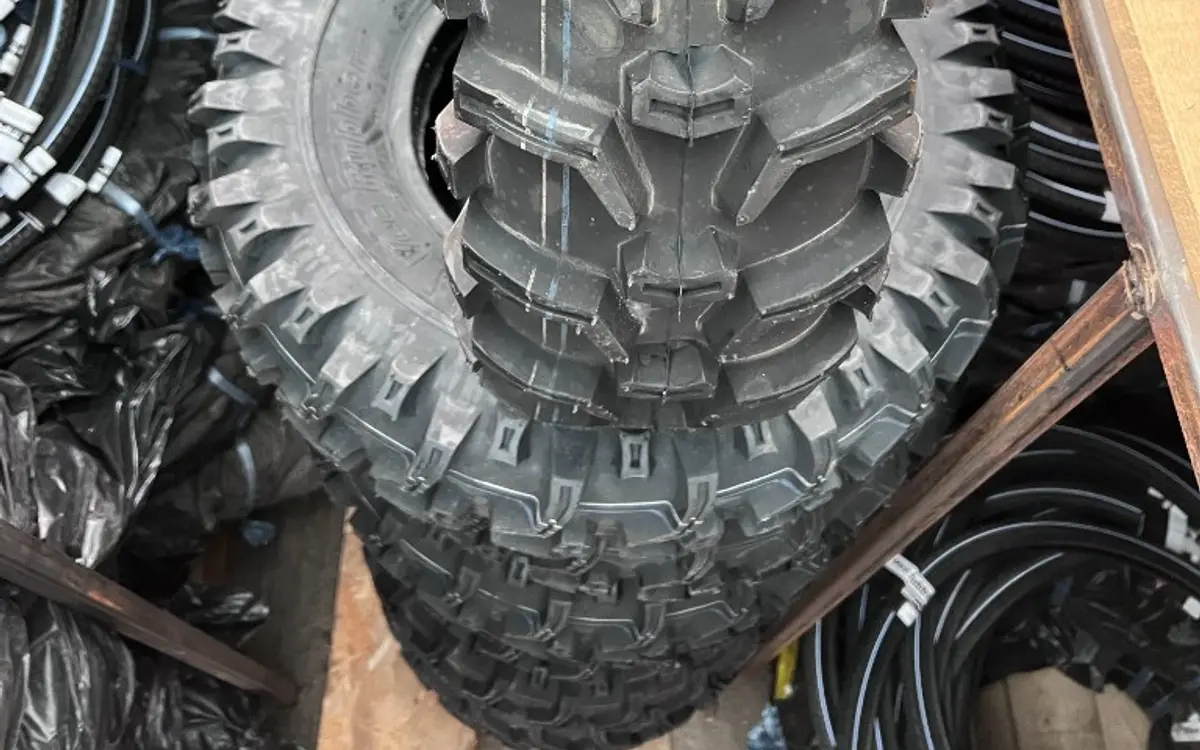
Even tread wear is the signature of correct pressure — edges and centre wear at the same rate.
Basic rule: the manual beats the internet
Recommended pressure comes from the vehicle manufacturer, not the tyre. The sidewall value (e.g. “MAX 65 PSI”) is the maximum limit, not daily recommendation. Find it in the manual, on a frame or swingarm sticker; on bicycles use the range on the sidewall as a starting point.
Bicycle: guide values
- Road — 80–110 PSI (5.5–7.5 BAR): narrow tyres, higher pressure for speed;
- Urban / trekking — 50–70 PSI (3.5–5 BAR): balance of comfort and speed;
- MTB — 22–35 PSI (1.5–2.4 BAR): lower pressure for off-road grip; with tubeless you can go lower;
- Fat bike — 5–15 PSI (0.3–1 BAR): float on snow and sand.
Useful rule: the heavier you are (or the more luggage), the closer to the top of the range. Tubes naturally lose 1–2 PSI per week — check often; if loss is faster, replace the tube: find bicycle tubes for any size.
Motorcycle and scooter: precision matters
On motorcycles, wrong pressure shows immediately in handling. Typical values are 2.0–2.5 BAR (29–36 PSI) front and 2.2–2.9 BAR (32–42 PSI) rear, but use exactly your bike’s manual values — they vary by model, load and tyre. Three golden rules:
- measure only when cold, before riding;
- raise rear pressure per manual when carrying a passenger or luggage;
- check weekly — just 0.3 BAR below normal overheats the tyre and accelerates wear.
ATV: low pressures, tighter tolerance
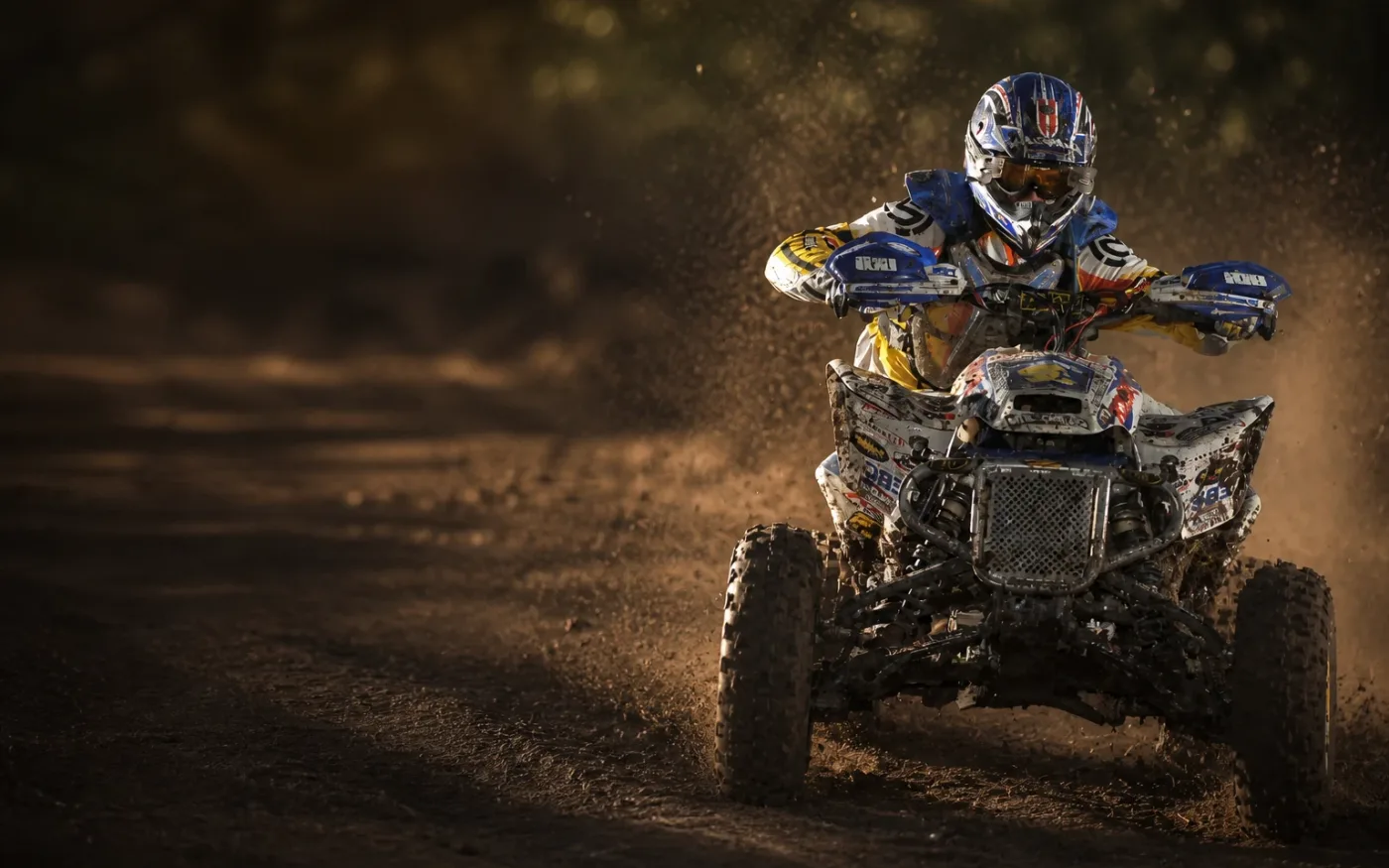
ATVs run surprisingly low pressures — usually 0.25–0.5 BAR (4–7 PSI) per manual. At such low values, even 1 PSI plus or minus visibly changes behaviour:
- equal left–right pressure on each axle — otherwise the ATV pulls to one side;
- use a low-pressure gauge — car gauges are often inaccurate at 3–10 PSI;
- on deep sand or mud you can temporarily drop 10–20%, but return to normal on hard surfaces.
Pressure mistakes we see most often
- Inflating “by feel” — squeezing the tyre won’t detect even a 20% pressure difference; use a gauge;
- Measuring when hot — after a few kilometres pressure rises naturally; manual values are “cold”;
- Same pressure on every terrain — soft ground wants less, tarmac and load want more;
- Ignoring slow leaks — a wheel that drops weekly has a problem: valve, tube or leaking bead.
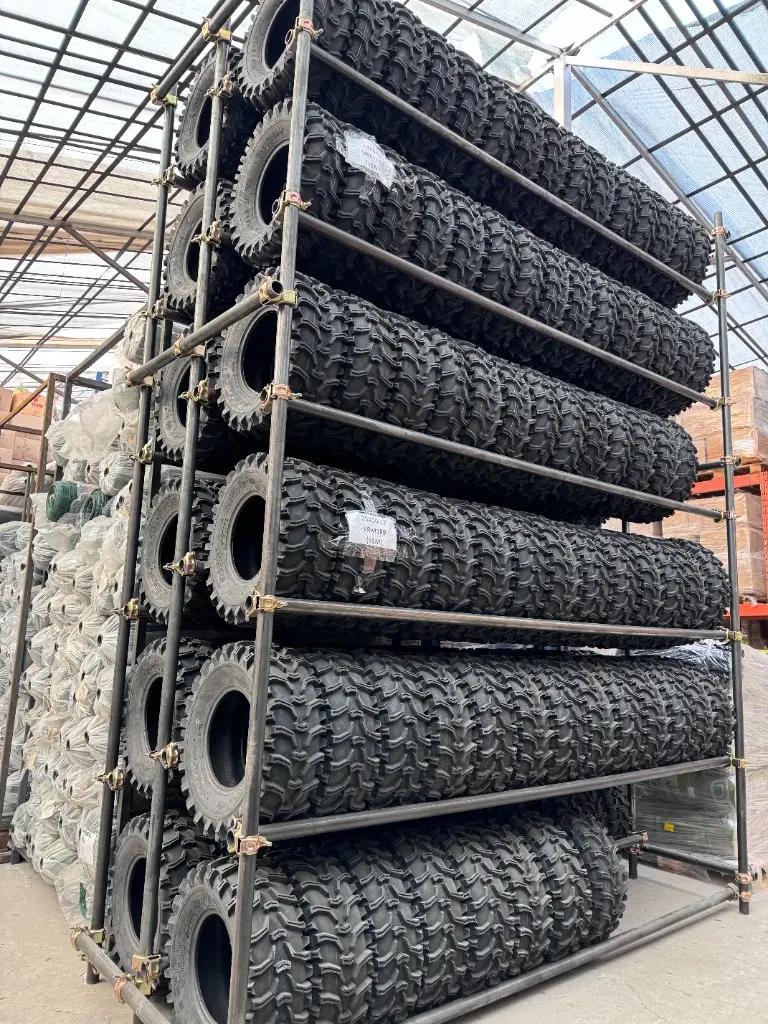
Correct pressure needs healthy tyres
No pressure saves a worn tyre or aged tube. Find the right set in real Roataway stock — Vee Rubber and Vee Tire Co, 48h delivery across Romania.
FAQ
Where do I find the recommended pressure for my vehicle?
For motorcycles and ATVs, in the owner’s manual and often on a sticker on the frame or swingarm. On bicycles, the range is printed on the sidewall (e.g. 35–65 PSI). The sidewall value is a limit, not a daily recommendation.
PSI or BAR — what’s the difference?
They are different units: 1 BAR ≈ 14.5 PSI. Good pumps show both scales. Example: 2.5 BAR is about 36 PSI.
Should I lower pressure on soft terrain?
Yes — on sand, mud or snow, lower pressure increases contact patch and traction. On ATVs you typically drop 10–20%; on MTB a few PSI. Return to normal on tarmac or you risk damaging tyre and rim.